 By
By Industrial sites in the USA are on the rise in upgrading from traditional security systems to cloud-based access control. The migration is fuelled by enhanced security, remote management, regulatory compliance, and operational efficiency. Cloud-based access control systems enable industrial and commercial businesses to monitor access in real-time, manage multiple sites smoothly, and protect capital assets against unauthorized access or internal threats.
The Security Challenges Industrial Facilities Face Today
Industrial infrastructures encounter particular security challenges which might impact the safety and the whole operation nature:
1. Unauthorized Access
Traditional lock-and-key or old access documents can be unreliable means of restricting entry to sensitive places like warehouse space, floor space, or server rooms.
2. Insider Threats
The absence of access control can lead to the involvement of employees, contractors, or temporary staff in security breaches, whether they are unintentional or deliberate.
3. Multi-Site Management Issues
The companies that operate several facilities usually face the problem of access coordination between sites, which is time and resource-consuming and exposes to the risk factor.
4. Compliance Gaps
The pharmaceutical, energy, chemical plants, and utilities industries are regarded as being in a difficult situation because of the stringent regulatory and audit requirements they have to comply with. Conventional systems are viewed as hindering the audit capabilities and risking non-compliance.
5. Operational Inefficiencies
Manual checks, issuing physical keys, and paper logs for tracking access take away your valuable time, money, and resources that are beyond the core operations of work.
Secure Your Facility with Smarter Access Today
Switch to cloud-based access control with ASI Systems and protect your business with advanced, scalable security solutions.
What is Cloud-Based Access Control and How It Works
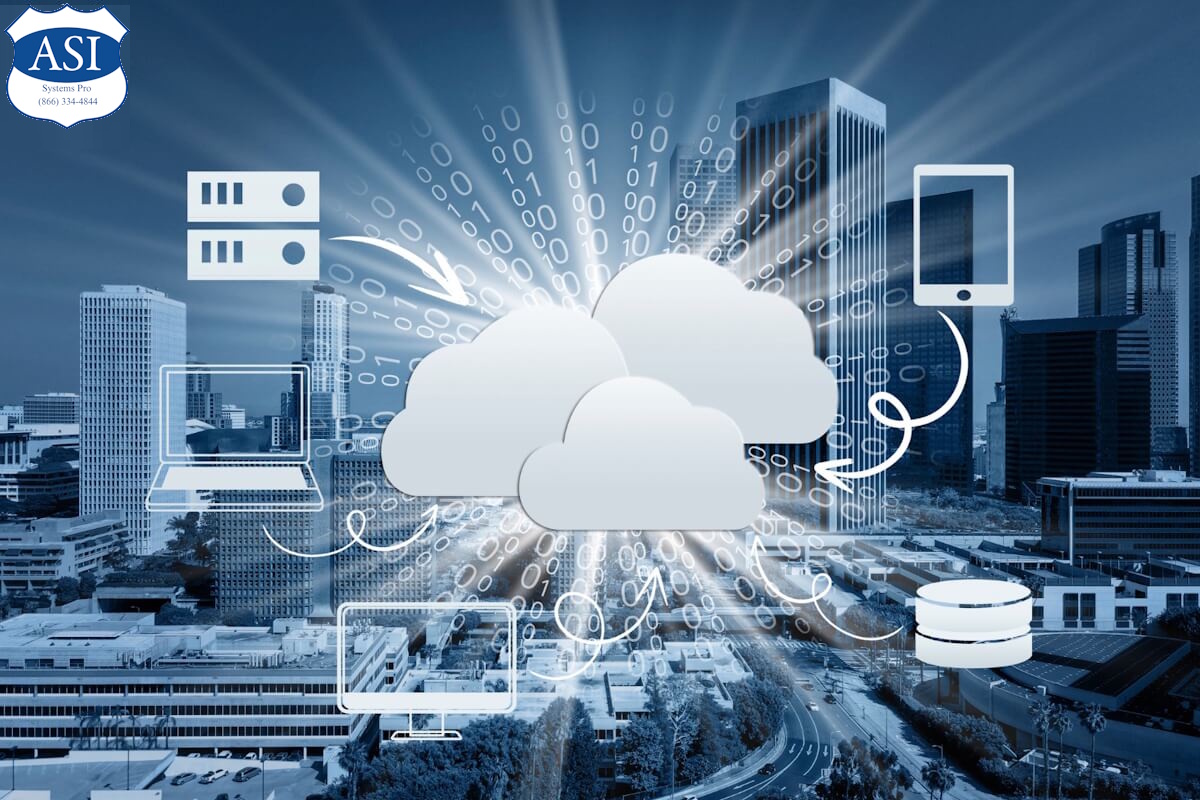
Cloud-based access control replaces traditional hardware-based locks with a software-driven system managed via the cloud. Some applicable services include:
The cloud-based access control system substitutes traditional hardware-based locks and, instead, relies on a software-driven system managed via the cloud. To mention a few, the following services are applicable:
1. Remote Monitoring
An administrator can monitor access to industrial and commercial sites anywhere within the United States utilizing web dashboards or mobile applications.
2. Real-Time Alerts
The system notifies the security personnel about the unauthorized access attempts which enables fast response actions.
3. Mobile Access Control
The authorized person can unlock the door or allow access using the smartphone or tablet.
4. Integration Capabilities
The cloud access control system connects with cameras, alarm systems, Internet of Things devices, and a personnel database to create one security ecosystem.
5. Scalability
The access control system can include a new site, a worker, or a control point without going through infrastructure upgrade and cost that is too much.
Remote Management and Multi-Site Oversight
1. Cloud access control systems enable industrial managers to:
· Monitor multiple facilities from a single dashboard, increasing oversight and minimizing unwanted activity.
· Instantly grant or revoke access for employees, contractors and visitors at one or multiple sites.
· Streamline operations; reducing manual security functions gives security managers greater efficiency and removes delays in approvals and provisioning access.
These features are especially important for large-scale industrial and commercial facilities with multiple sites, in particular large facilities.
2. Enhanced Cybersecurity and Compliance
· Cloud systems are located on secure servers with advanced encryption which reduces risks involved with an on-site server and keeps you secure.
· As a result, they help industrial facilities meet strict regulatory requirements in highly regulated industries, such as pharmaceuticals, energy, utilities, and chemical plants.
· They automatically maintain audit trails and logs which makes the life of inspectors easier and ultimately holds operators accountable meeting industry regulations.
· Such zones are secure against all types of internal and external security threats such as cyber-attacks or unauthorized access by an unaccompanied visitor.
3. Cost Efficiency and Operational Savings
Industrial and commercial buildings gain considerable cost and operational advantages:
· Lower Hardware Costs: The cloud eliminates the necessity of having huge on-premises servers, control access panels, and distributing keycards, which are all typical hardware costs.
· Reduced IT Overhead: The cloud supplier is the one who does all the updates, fixes, and maintenance automatically for the company.
· Operational efficiency: The workforce spends considerably less time on access security measures and reporting, so the resources can be diverted to primary activities.
· Measurable ROI: A lot of buildings say that the costs have been reduced in the first year, and the reason for this is fewer incidents, less manpower, and lower maintenance costs.
Ready to Modernize Your Facility’s Security System?
Let ASI Systems help you upgrade to a cloud-based access control system designed for industrial performance and reliability.
Why Businesses Are Making the Switch
The rise of cloud-based access control is accelerating because of:
1. Modernization Needs
Access systems that are no longer current cannot adapt and thus limit the advantage that digital transformation would otherwise give the industrial and commercial sectors.
2. Remote Workforce Management
Access needs for employees, contractors, and vendors should be manageable for the supervisors and security teams from any location.
3. Digital Security Priorities
The increasing number of threats demands immediate and comprehensive monitoring, reporting, and secure access management.
4. Scalability for multi-site Operations
Cloud-hosted solutions can easily allow companies to grow security systems across multiple sites without significant capital improvement or infrastructure investments.
Real-World Examples and ROI
· Manufacturing Plant: Unauthorized access events reduced over 40% in 6 months, leading to overall safety in operations.
· Multi-Site Warehouse Operator: Saved $50,000 per year on hardware, labor, and security administration.
· Energy Facility: Full regulatory compliance and simpler audits through cloud-based access control.
The above cases reveal how both industrial and commercial facilities gain both financial and operational benefits by taking a step towards a cloud-based system.
Choosing the Right Cloud-Based Access Control Partner
When selecting a provider, industrial and commercial enterprises should consider:
· Scalability: Does the system have the option to grow as your site or does the multi-site network grow?
· Integration: Is it possible to integrate commercial solutions with cameras, alarms, IoT sensors and your current IT systems?
· Support: Does your provider offer 24/7 technical support and an emergency response offered by the provider?
· Cybersecurity Expertise: Does the provider guarantee both your facility’s digital security as well as physical security?
ASI Systems specialize in delivering comprehensive cloud-based access control solutions for industrial and commercial facilities across the USA. ASI Systems believes in improving security in your facilities and improving multi-site management, seamless system integrations and cybersecurity knowledge. ASI Systems does intelligent cloud-based access control solutions whilst ensuring your site is secure, compliant and ready for tomorrow.
Conclusion
Industrial facilities all over the USA will migrate to cloud-based access control systems in 2025 for enhanced security, remote management, compliance, and cost savings. Replacing contemporary access control systems with cloud-based ones not only keeps your facility secure and efficient but also future-ready.
Working along with a reliable partner like ASI Systems not only promises a smooth transition but also an access to expert support and scalable solutions that can grow along with your business. Besides, through the adoption of cloud-based access control today, industrial and commercial facilities will be able to protect the assets, streamline operations, and stay ahead in security innovation.
Discover the ROI of Cloud-Based Access Control
Learn how your facility can reduce costs, improve control, and ensure compliance with ASI Systems’ next-gen access solutions.
FAQs for Cloud-Based Access Control for Industrial Facilities
What is cloud-based access control for industrial facilities?
Cloud-based access control is a software-driven application that allows monitoring access remotely, managing multiple sites, and enhancing overall security and compliance for facilities in industry and commerce.
How does cloud access control improve industrial security?
Cloud access control enhances the security of the industrial site by preventing unauthorized access, sending real time alerts, and integrating with existing collaboration with camera, alarms, and other systems to secure your site.
Can I manage multiple industrial sites with one cloud access system?
Yes, a cloud access system allows administrators to control access, assign permissions, and monitor activity across all industrial and commercial sites in real time using a detailed cloud-based application.
Which industries benefit most from cloud-based access control?
Industrial and commercial facilities, primarily in manufacturing as well as energy, utilities, pharmaceuticals, logistics, and multi-site commercial buildings have the most to gain from a cloud access control solution.
Why are industrial facilities switching to cloud-based access control in 2025?
To enhance security, reduce operational costs, maintain regulatory compliance, and manage multiple sites efficiently, industrial facilities will upgrade in the year 2025. Industrial plants will go for security enhancement, cost reduction, regulatory compliance and efficient site management by upgrading in 2025.